Spearfishing in Victoria — Complete Beginner's Guide
How to start spearfishing in Victoria — licence, safety basics, gear, local waters, and your first season as a beginner spearo.
Victoria has hundreds of kilometres of coastline, from shallow reef in Port Phillip Bay to deeper structure off the Surf Coast and Gippsland. Spearfishing here is accessible, rewarding, and — when you learn the basics first — very safe. Unlike tropical destinations where warm water and coral gardens dominate the marketing, Victorian spearfishing is a cold-water, temperate-reef sport. That means thicker wetsuits, shorter sessions in winter, and a fish list built around snapper, flathead, trevally, squid, and reef species rather than coral trout and Spanish mackerel.
This guide is your starting point. It links to deeper articles on rules, safety, equalising, and gear. Read it once, bookmark the linked articles, and work through the steps in order. Skipping safety or regulations to get in the water faster is how beginners create problems for themselves and for the wider spearfishing community.
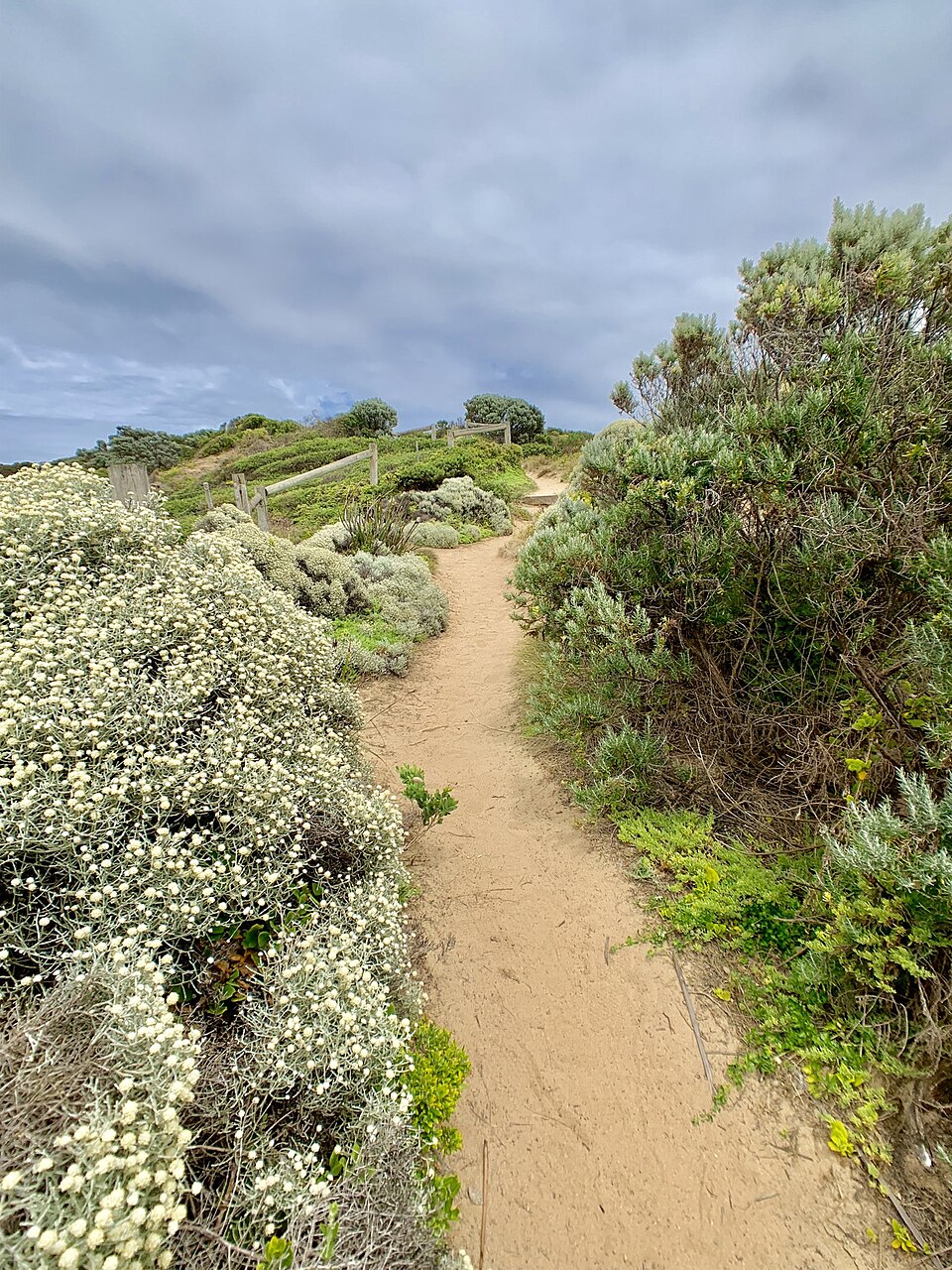
Photo: Kgbo, CC BY-SA 4.0, via Wikimedia Commons
What spearfishing actually involves
Spearfishing is hunting fish underwater on a single breath. You dive, stalk or wait for fish, and take a selective shot with a speargun or pole spear. Unlike line fishing, every catch is intentional — which is why size limits, bag limits, and ethical shot placement matter. You are not dragging a hook through the water hoping something bites. You choose a species, confirm it is legal and of size, and take one shot at the kill zone.
In Victoria most beginner shore dives are 3–8 metres. You do not need to dive deep to put a feed on the table. Snapper, flathead, trevally, squid, and reef species are all taken by shore spearos every season. Many experienced Victorian divers spend the majority of their career in less than 12 metres. Depth is a skill you build over years, not a requirement for your first year.
The sport combines breath-hold diving, fish identification, hunting technique, and navigation. You need to read tide, swell, and wind. You need to know what fish you are looking at before you pull the trigger. And you need a buddy who understands that spearfishing safety is built around preventing shallow water blackout — not around shark anxiety.
Step 1 — Get legal
Before you enter the water you need a valid Victorian recreational fishing licence (unless you are exempt). Spearguns and hand spears are allowed in many marine waters but banned in specific locations — including all inland waters and several estuaries. Carrying spearfishing equipment in or near Victorian waters without a licence is an offence, even if you are not diving that day.
The Victorian Fisheries Authority publishes the Recreational Fishing Guide each year. That document is the authoritative source for bag limits, size limits, closed seasons, and equipment restrictions. Our articles summarise what spearos need to know, but regulations change. Check the VFA guide before every new season.
Read our full breakdown: Victoria spearfishing rules, licence and limits. Pay particular attention to marine national parks, sanctuary zones, and the list of waters where spears are prohibited entirely. A GPS app such as VicFishing helps confirm boundaries, but it does not replace reading the rules.
Step 2 — Learn breath-hold safety first
The biggest risk in spearfishing is not sharks — it is shallow water blackout. This can happen in calm, shallow water when divers hyperventilate or skip surface recovery time. Blackout typically occurs on ascent, often within the top five metres, when falling oxygen and rising carbon dioxide cause a loss of consciousness before the diver can breathe. It kills fit, experienced divers in Australian waters, often in calm conditions.
Non-negotiable habits:
- Always dive with a trained buddy using one up, one down
- Never hyperventilate before a dive
- Rest at least twice as long as your last dive on the surface
- Take a freediving or spearfishing course before pushing depth
Read more: Shallow water blackout guide and buddy system. Work through our spearfishing safety checklist before your first shore session. If you cannot find a buddy who understands blackout rescue, postpone diving until you can.
Step 3 — Sort your equalising
If ear pressure stops you below 5–10 metres, you are probably using Valsalva (blowing against a pinched nose with chest pressure). Spearos need Frenzel — a tongue-and-throat technique that works as lungs compress at depth. The first 10 metres of a dive involve the steepest pressure increase. Getting equalising right early prevents barotrauma and opens up the depths where Victorian snapper and other species hold.
Start here: Can't equalise past 10 metres? and Frenzel for spearos. For context on why Valsalva fails breath-hold divers, read Valsalva vs Frenzel. Practise on land for two weeks before your first duck dive. Do not force through ear pain — ascend, reset, and try again.
Step 4 — Build a simple gear kit
You do not need the most expensive kit on day one. A low-volume mask, simple snorkel, soft freediving fins, 3–5 mm wetsuit (thickness depends on season), weight belt, knife, float with Alpha flag, and a 90–110 cm rail gun cover most Victorian shore diving. Total spend can exceed $2,000 if you buy everything new, which is why borrowing first makes sense.
Borrow before you buy: Beginner spearfishing gear for Victoria and try gear from the equipment library. Verified members of approved organisations can request equipment from the Victorian Spearfishing Commission Equipment Library. Mask fit, fin stiffness, and wetsuit thickness are personal. Testing kit in real Victorian water beats reading reviews.
Once you have basic kit, learn weight belt and buoyancy before adding a speargun. Over-weighting is a common beginner mistake that makes recovery harder and increases blackout risk.
Step 5 — Learn one hunting technique
Beginners catch more fish with aspetto (waiting on the bottom) than by chasing everything they see. Find a ledge, settle quietly, and let curious fish come into range. Aspetto suits Victorian reef structure — ledges, weed edges, and other structure in permitted areas (never within 30 m of a pier, jetty or wharf) all hold fish that will investigate a patient diver.
Technique guide: Aspetto ambush spearfishing. For a specific target species, read How to spearfish snapper in Victoria. Stalking and chasing come later, after your buoyancy, equalising, and buddy system are automatic.
Where Victorians actually dive
Popular beginner areas include Mornington Peninsula reefs, parts of Port Phillip Bay (check marine park zones), Phillip Island, and parts of the Gippsland coast (spearguns are banned in most Gippsland inlets and lakes). Always confirm current restrictions — our Port Phillip Bay beginner guide and banned waters list explain the main traps.
Port Phillip Bay is the most accessible water for Melbourne-based divers, but it contains multiple no-take marine park zones. A dive that feels productive can still be illegal if you are inside a sanctuary boundary. Mornington Peninsula offers clearer water and reef structure in summer, with boat traffic that demands strict float-and-flag discipline. Western Victoria and the Surf Coast offer different species and swell exposure — not ideal first-dive locations.
Join a local club or freediving school to learn site-specific knowledge. Experienced divers know which entries are safe in which swell, where rip currents form, and which reefs hold fish without crossing into protected zones.
Finding community and training
Victoria has active spearfishing and freediving communities. A course through PADI Freediver, AIDA, or Molchanovs gives you equalising instruction, blackout rescue drills, and a network of dive buddies. Club meetups through Facebook groups and organised shore dives are how most Victorians find regular partners.
VRFish represents recreational fishers including spearos at a policy level. Staying legal and diving safely protects access for everyone. The Victorian Spearfishing Commission runs the Equipment Library and supports the sport at a state level — worth knowing about before you buy your first gun.
Your first 30 days
- Week 1: Licence, read rules, find a buddy or club, practice equalising on land
- Week 2: Pool or shallow bay session — mask, fins, weighting only. No speargun.
- Week 3: First shore dive in 3–5 m — aspetto on sand or weed edge, no hero shots
- Week 4: Add speargun only when buoyancy and buddy system feel automatic
Do not compress this timeline if skills are not solid. There is no prize for shooting a fish on your third dive. There is a serious consequence for skipping buddy training or diving congested when your ears will not clear.
Between weeks two and three, review the safety checklist with your buddy. Agree on hand signals, maximum depth, and what happens if someone does not surface on time.
Common beginner mistakes to avoid
- Diving alone because no one was available that day
- Hyperventilating before dives to "last longer"
- Buying a long bluewater gun before learning reef hunting
- Ignoring marine park boundaries because "everyone dives there"
- Targeting fish before confirming species, size, and bag limit
- Skipping surface recovery time to maximise time in the water
Each of these is fixable. The first two can kill you. Treat them accordingly.
FAQ
Do I need a spearfishing course in Victoria?
Not legally, but strongly recommended. A course covers blackout rescue, equalising, gun safety, and fish ID. The cost is modest compared to a year of frustration or a trip to emergency with barotrauma.
Can I spearfish alone?
Technically in some waters yes — practically, never. Solo spearfishing is how fatalities happen. Read our buddy system guide and find a regular partner.
How deep do beginner Victorians dive?
Most shore fish are shot between 3 and 10 metres. Depth comes later, after equalising and safety are solid. See Can't equalise past 10 metres? if depth is your bottleneck.
Where can I borrow gear to try the sport?
Verified members of approved organisations can request equipment from the Victorian Spearfishing Commission Equipment Library. Read try gear before you buy for the process.
Do I need a boat to spearfish in Victoria?
No. Many spearos dive from shore year-round. Boat access opens more structure and offshore species but is not required to start.
What fish should I target first?
Start with common inshore species you can positively identify — flathead, squid, and smaller reef fish in legal size. Leave snapper until your shooting and fish ID are reliable. See How to spearfish snapper in Victoria when you are ready.