Aspetto — Ambush Spearfishing Technique for Beginners
Learn the aspetto (wait-and-ambush) spearfishing technique — how to lie on the bottom, stay safe, and let fish come to you in Australian waters.
Chasing fish burns oxygen and sends everything fleeing. Aspetto — Italian for "to wait" — is lying quietly on the bottom and letting curiosity bring fish into range. It is how many Victorian beginners get their first snapper, trevally, or flathead without the fitness demands of long stalks or deep drops.
The technique is simple to describe and hard to master. Patience, buoyancy, and stillness are the whole game. This guide covers when aspetto works in Victorian waters, how to set up a dive step by step, how it differs from stalking, and the safety habits that keep waiting dives from becoming dangerous.
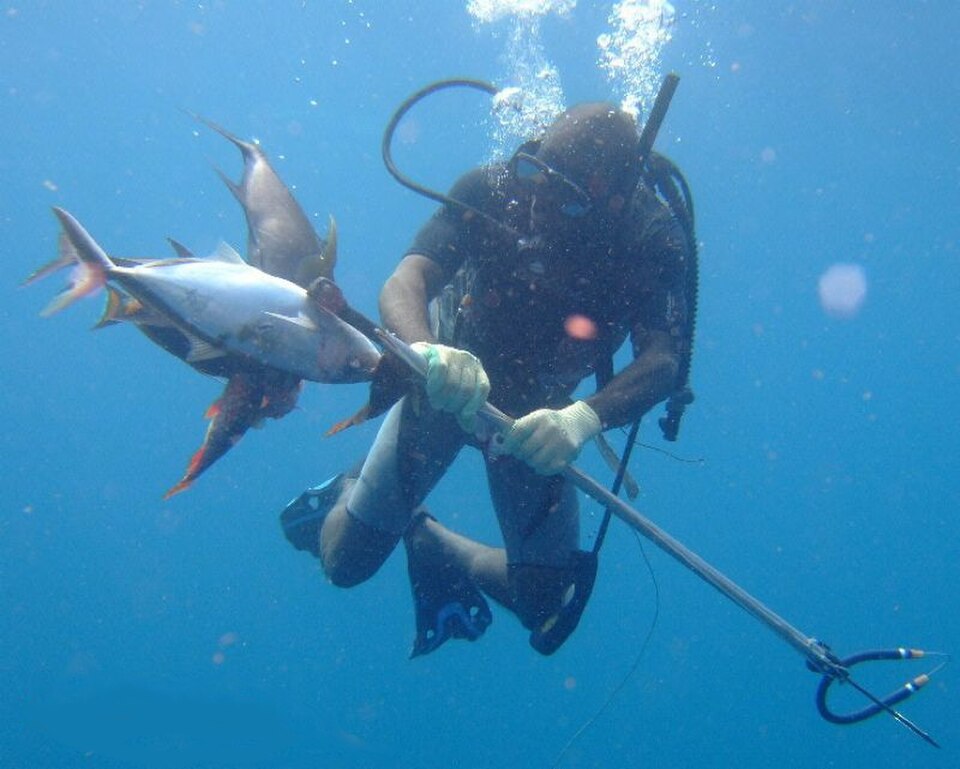
Photo: Johnmartindavies, CC BY-SA 3.0, via Wikimedia Commons
When aspetto works best
Aspetto shines where fish travel predictably and visibility lets them see you from a distance — then forgive your stillness.
Structure: Reef edges, weed lines, sand channels beside rock, and drop-offs where snapper and trevally cruise. Victorian shore sites on the Mornington Peninsula, parts of Port Phillip Bay outside sanctuary zones, and Phillip Island reefs all offer this geometry.
Species: Snapper, bream, trevally, flathead, goatfish, and silver trevally respond well to a patient diver. Flathead on sand often sit still until you are close — aspetto on the edge of a sand patch catches fish moving between weed and open bottom.
Depth and visibility: Shallow 3–8 metre sessions where bottom time is manageable and you can equalise comfortably. Murky Port Phillip Bay water may push you shallower; clear ocean days off the Surf Coast may let you work slightly deeper. Match depth to your equalising ability — not to what Instagram divers post.
Conditions: Light current helps — fish face into flow on the up-current side of structure. Dead calm days work; strong surge makes lying still on reef uncomfortable and unsafe.
Less effective for fast pelagics in open water, tuna offshore, or fish that never relate to bottom structure. Those situations call for stalking (agguato), flashers, or boat-based hunting — techniques beyond this beginner guide.
Setup step by step
- Scout from the surface — identify the ledge, gutter, or sand edge before you dive. Watch for five minutes. Note which direction fish travel, where the weed ends, and where current pushes.
- Quiet duck dive — equalise early and often. First equalisation at 1–2 metres, not when pain hits at 4 metres. See Frenzel guide.
- Settle on the bottom — minimal fin movement. Touch down softly. Gun extended towards the expected travel path, not pointed at the sand.
- Stay still 30–90 seconds — watch your periphery, not just straight ahead. Fish often approach from the side or from behind.
- Measured shot when fish commits — lateral head or shoulder shot preferred. Do not rush when the fish is still at the edge of range.
Between dives, discuss what you saw with your buddy. Aspetto improves fast when you debrief — "they came from the left every time" is actionable intelligence for the next drop.
Buoyancy matters
You cannot wait on bottom if you are fighting floaty weighting. Every scull and fin kick costs oxygen and announces your presence. Dial in your belt using the weight belt guide before you practise aspetto seriously.
At hunting depth you want neutral or slightly negative buoyancy with a normal breath. Too heavy and you sink into the sand, stirring silt and ruining visibility. Too light and you hover above the fish, silhouetted against the surface — the worst possible profile.
Borrowed wetsuits from the equipment library change your weight needs. Re-test every time you change suit thickness or gun weight.
Body position and stealth
Lie on your side or chest depending on comfort and target species. Chest-down works on sand for flathead approaches; side-lying suits reef edges where snapper cruise at eye level.
Keep your fins still. Micro-movements telegraph predator behaviour. Rest the gun arm on the bottom or your thigh to reduce shake.
Breathing on the bottom should be minimal — calm, small exchanges. Big chest movements lift you off the bottom and scare fish. If you need to breathe heavily, ascend, recover fully, and try again.
Mask positioning matters in clear water. Some divers close their eyes or look slightly away so approaching fish do not meet direct predator eye contact. Experiment on plentiful species before trying it on a trophy snapper.
Safety with aspetto
Stillness extends bottom time — the dive feels easy, which is exactly when blackout risk increases. Comfortable dives lull you into staying "one more minute."
Non-negotiable rules:
- Buddy watching entire ascent — one up, one down. No surface diver scrolling their phone. Full protocol: buddy system.
- Surface interval 2× dive time — longer in cold Victorian winter water.
- Ascend with air to spare — never "one more minute" when your urge to breathe is rising.
- No hyperventilation before drops — normal breathing only. Read shallow water blackout.
Aspetto is not a excuse to extend dives beyond your training. Beginners should cap bottom time until a freediving course gives you a reliable comfort envelope.
Run the safety checklist every session. Waiting dives feel low-risk; they are not.
Aspetto vs stalking
| Aspetto | Stalk (agguato) |
|---|---|
| You wait on structure | You move towards fish |
| Lower oxygen use | Higher skill and fitness |
| Best on reef edges and weed lines | Best on sand flats and cruising fish |
| Forgiving for beginners | Punishes sloppy approach angle |
Many Victorian sessions combine both — aspetto on structure, short stalks across sand between weed patches. Snapper that will not come to you on the reef may respond to a slow crawl across the sand channel. Read stalking basics in the main beginner guide.
For snapper specifically — shot placement, legal limits, and seasonal movement — see how to spearfish snapper in Victoria.
Victorian tips
Morning and dusk often bring snapper higher on reef and closer to shore. Midday summer sun can push fish deeper or under ledges. Plan around tide and light, not just swell.
Port Phillip Bay demands map discipline. The best-looking reef edge may sit inside a marine national park sanctuary. Verify every new spot: Bay guide and banned waters.
Winter diving means shorter waits, thicker suit, more weight, and honest session lengths. Cold increases breath-hold stress. Same safety discipline applies.
Jetty exclusions — the statewide 30-metre rule from jetties and river mouths catches divers who set up aspetto near pier structure. Check your GPS pin.
Club mentorship — Victorian clubs teach local reef geography that no article replaces. Pair this guide with organised dives before exploring alone.
Common beginner mistakes
Landing on the bottom hard. Stirring sand and clattering gun on rock announces you. Soft touchdowns only.
Watching only straight ahead. Snapper often approach from the side. Use peripheral vision.
Staying too long. Comfort is not a reliable signal. Use a mental timer or buddy tap on the surface between dives.
Wrong weighting. Hovering above the bottom or sinking into silt both fail. Fix weight before blaming "no fish."
Shooting at range. Aspetto gives you close shots. If you are stretching the band, the fish has not committed — wait or let it go.
FAQ
How long should I stay down?
Only as long as comfort with plenty of reserve — beginner cap 30–45 seconds on bottom until trained. A freediving course gives you a personal limit based on breath-hold and recovery data.
Do flashers help aspetto?
Offshore and blue-water hunting, yes. Inshore Victorian reef often relies on natural fish movement. Berley rules vary by place — check the VFA guide and Victoria rules before assuming any attractant is permitted.
What gun length for aspetto in the bay?
90–110 cm rail guns suit most Victorian inshore reef. Shorter guns manoeuvre better in murk; longer guns reach further on clear ocean reef. Borrow and test via the equipment library.
Can I practise aspetto without a speargun?
Yes — and you should. Weight belt, mask, fins, buddy. Lie on bottom, watch fish behaviour, ascend safely. Add the gun only when buoyancy and buddy protocol are automatic.
Best species to learn on?
Flathead and goatfish are forgiving teachers — they hold on sand and respond to stillness. Snapper are the prize but spook easier. Build confidence on plentiful species first.
Next species guide: Snapper in Victoria