Spearfishing Port Phillip Bay — Beginner Guide to Legal Dives
Spearfishing Port Phillip Bay for beginners — marine parks, no-take zones, species, access, and safety in Melbourne's bay.
Port Phillip Bay is Melbourne's backyard — shallow, accessible, and full of reef structure. It is also heavily regulated. Beginners need maps in hand, not guesswork. A metre inside a marine national park sanctuary can turn a productive reef into a serious offence. Boat traffic, jetty exclusion zones, and variable visibility add operational complexity that open coast sites sometimes avoid.
This guide explains why the Bay is legally tricky, what species spearos encounter, safety habits specific to urban bay diving, and a practical path for Melbourne beginners. It does not replace official maps — verify every new entry point on the VFA recreational fishing guide or VicFishing app.
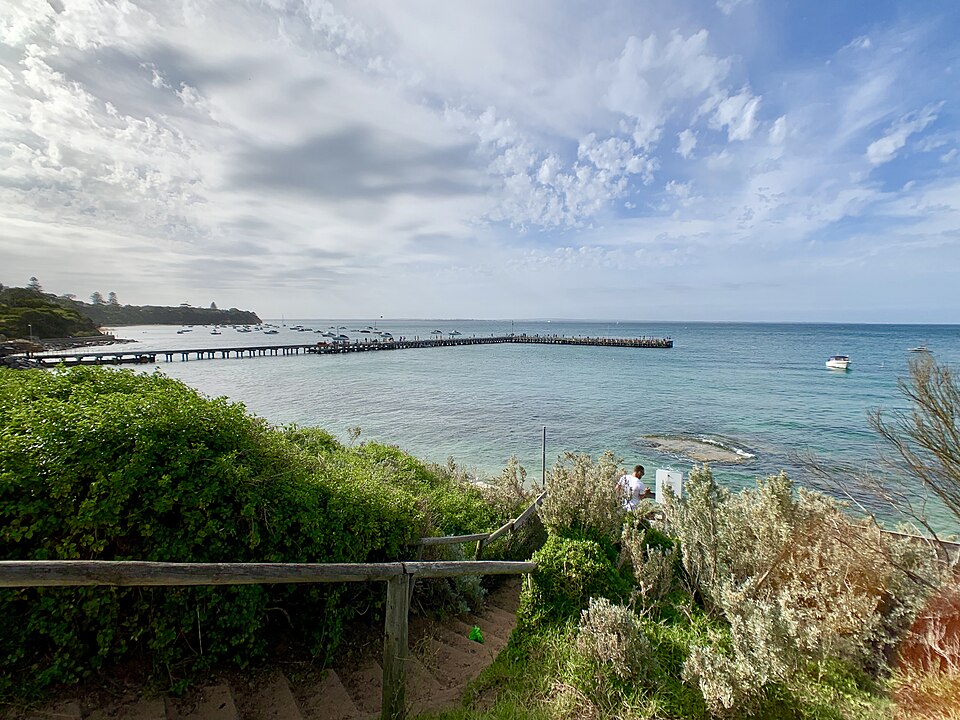
Photo: Kgbo, CC BY-SA 4.0, via Wikimedia Commons
Why the Bay is tricky legally
The bay contains marine national parks and sanctuaries where you cannot take any marine life. Boundaries follow irregular lines along reef and coastline — not beach access points, not "where everyone parks." Fishing one metre inside a no-take zone is an offence with significant penalties.
Nested zones compound the problem. A shore entry may be legal while the reef you swim to is not. A pier approach may trigger the statewide 30-metre exclusion around piers, jetties and wharves, which covers hand spears and spearguns. An estuary mouth nearby may be a named closed water.
Use the VicFishing app or VFA maps before every new spot. Pin your intended dive area, not just the suburb name. When unsure, do not dive.
Full prohibited categories: Where spearfishing is banned in Victoria. Licence and general rules: Victoria regulations.
Where spearfishing is generally considered
This article does not replace official maps — spots change status and this guide does not publish a spot list that could go stale or encourage trespass on closed ground.
Historically, Victorian spearos access:
- Selected reef areas outside sanctuary boundaries — verify the exact reef leg, not the general bay region.
- Some pier approaches — subject to the 30 m jetty exclusion statewide. Standing on the beach near a pier is not the same as being legal at the reef fifty metres offshore.
- Western and southern bay reefs when conditions allow — wind and boat traffic vary enormously by sub-region.
- Eastern bay areas — equally zone-dependent; sanctuary maps are dense on the Mornington Peninsula side.
Always verify current zoning. Social media photos are not evidence of legality. Club mentors help; maps decide.
Swan Bay near Queenscliff is closed to hand spears, and part of it sits inside Port Phillip Heads Marine National Park — treat it as closed regardless of how accessible it looks. See the banned waters guide.
Bay species for spearos
- Snapper — minimum 28 cm; bag limit 10, of which no more than 3 can be 40 cm or longer. Can't be filleted in or on the water. Check the VFA guide each season. Technique: snapper guide.
- Flathead on sand edges — forgiving beginner species; still subject to size limits.
- Squid — popular in the bay; check current rules and permitted methods.
- Reef species — silver trevally, goatfish, wrasse, and others. Know ID before shooting. Not everything on reef is legal or sensible to take.
Hunting approach: Aspetto on reef edges and weed lines outperforms chasing in murky water. Fish see you less clearly but spook from noise and silhouette just the same.
Bay-specific safety
Port Phillip Bay demands safety habits beyond generic open-coast diving.
Boat traffic is dense — recreational craft, ferries, sailing schools, and commercial traffic on some corridors. Large Alpha flag (boats must slow to 5 knots within 100 m of one), stay near flag when surfacing, and assume skippers have not seen you. Surface swim back to your float rather than popping up fifty metres away in a channel.
Visibility varies — two metres one week, eight metres the next. Poor vis increases buddy separation risk. Maintain buddy discipline — closer protocol, more frequent surface checks, agreed hand signals before entry.
Shallow dives still need blackout prevention — most bay shore diving is 3–6 metres. Blackouts happen here, not only on deep ocean drops. Read shallow water blackout and run the safety checklist every session.
Strong tidal flow in the heads — Port Phillip Heads is not beginner terrain. Current, boat traffic, and exposure combine badly for new divers. Build skills on sheltered reef before considering headlands.
Urban water quality — after heavy rain, runoff affects some bay beaches. Make your own risk call; clubs often post guidance.
Jetty and pier exclusions — photographing gear on a pier is not diving legally underneath it. The 30-metre rule applies statewide.
Gear notes for bay diving
- Shorter gun (90–100 cm) suits murky shallow reef — manoeuvrability beats reach when you cannot see past arm's length.
- Bright float essential — high visibility in boat traffic. Rigging must keep flag upright.
- 3.5 mm suit often enough in summer; 5 mm for winter bay sessions.
- Weighting — re-test in bay water with your full kit. Borrowed suits change everything: weight belt guide.
- Knife, whistle, phone in dry bag at the car — basic shore safety.
Borrow kit before buying bay-specific gear: equipment library. A 130 cm gun built for clear ocean is unwieldy in Port Phillip murk.
Getting started from Melbourne
A practical sequence for your first bay season:
- Licence and rules — regulations guide. Read banned waters and bay zoning before you touch the water.
- Buddy from local club — organised dives teach map literacy and boat-traffic habits faster than solo exploration.
- Borrow kit — mask fit, gun length, suit thickness. Equipment Library for verified members.
- Equalising and weighting — pool or shallow sessions first. Frenzel guide and weight belt setup.
- First ocean bay dives on calm weekday mornings — less chop, less boat wash, easier buddy tracking.
- One technique — aspetto on a legal reef edge before adding stalking or depth.
Read the Victoria beginner guide for the wider state context beyond the bay.
Planning a bay dive — checklist
- Map pin verified on VicFishing — sanctuary boundary checked
- Buddy confirmed; one up one down agreed
- Weather and wind under your limit
- Float and flag rigged and visible
- Licence current; species limits reviewed for targets
- Entry and exit path safe for swell and boat lanes
- Someone on land knows your plan
Common beginner mistakes in the Bay
Assuming "everyone dives here" means legal. Popular Instagram entries may sit inside sanctuaries.
Diving without a flag. Boats will not expect a diver in suburban-looking water.
Solo diving because the bay feels tame. Boat traffic and blackout risk both argue against it.
Ignoring poor vis buddy protocol. Losing visual contact in two metres of water happens fast.
Chasing fish in murk. Aspetto and patience outperform sprints that spook everything and burn oxygen.
FAQ
Can I spearfish near Rye or Sorrento piers?
Jetty 30 m exclusion applies. Sanctuary zones nearby — check map pin exactly. The pier car park is not a reliable guide to underwater zoning.
Is shore diving the Bay safe for solo divers?
Never recommended. Boat traffic and blackout risk both argue for buddy diving. Practically indefensible regardless of legality.
Where is the official map?
VFA recreational fishing and VicFishing app. Update the app before each season.
What gun for Port Phillip Bay beginners?
90–100 cm single-band rail gun is the common starting point. Borrow and test before purchasing.
Can I spear squid in the bay?
Subject to current rules — check VFA guide for permitted methods, size limits, and any closed areas. Rules change; verify annually.
Is winter bay diving worth it?
Yes with thicker suits, adjusted weighting, shorter sessions, and honest cold-water limits. Fish are still present; your comfort envelope shrinks.