Shallow Water Blackout — A Spearo's Guide to Prevention
What shallow water blackout is, why it kills experienced spearos in calm water, and the simple rules that prevent it in Australia.
Shallow water blackout is the silent killer of spearfishing and freediving. It often happens in calm, shallow water to fit, experienced divers who felt fine seconds earlier. The good news: it is largely preventable when you understand the physiology and follow a strict buddy system. This is not a theoretical risk discussed in courses and forgotten on the reef. A review of 317 snorkelling and breath-hold diving deaths in Australia from 2000 to 2021 found up to 34 drownings after blackout from extended breath-holding — particularly younger breath-hold divers pushing their limits without close supervision (Lippmann, 2025).
Victorian waters — Port Phillip Bay, Mornington Peninsula, Gippsland — are exactly the environment where blackouts occur. Calm, shallow, accessible. Beginners and experienced divers alike. If you spearfish in Victoria, read this article, read our buddy system guide, and implement both before your next dive.
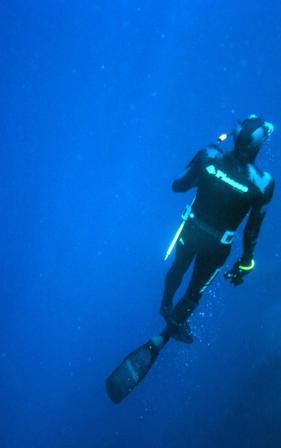
Photo: David McMurdie, CC BY-SA 3.0, via Wikimedia Commons
What is shallow water blackout?
Blackout is a loss of consciousness from lack of oxygen to the brain. In spearfishing it typically occurs near the surface on ascent — often within the top 5 metres — when falling oxygen and rising carbon dioxide trigger a loss of consciousness before you can breathe.
It is not drowning in the traditional sense. The diver goes limp underwater and, without immediate rescue, sinks and drowns. The sequence is fast. A buddy watching the ascent can reach the diver within seconds. A solo diver blacking out at three metres has no chance.
The term "shallow water blackout" is slightly misleading because the mechanism is not about depth — it is about oxygen partial pressure in the blood and brain. But the name persists because most spearfishing blackouts happen when the diver is ascending through shallow water after a breath-hold dive, not at maximum depth.
The physiology in plain terms
When you hold your breath and dive, your body uses stored oxygen. Carbon dioxide builds up. The urge to breathe is driven primarily by CO₂, not by low oxygen. Hyperventilating before a dive lowers CO₂ without significantly increasing oxygen. You feel comfortable underwater while oxygen drops to dangerous levels — the "silent hypoxia" that precedes blackout.
On ascent, ambient pressure decreases. Oxygen partial pressure in the blood drops further relative to what your brain needs. The last few metres of ascent are the highest-risk zone. Many divers report feeling fine at depth and losing consciousness within metres of the surface.
This is why experienced, fit divers blackout. Fitness does not protect you. Understanding physiology and following strict protocols does.
Why "shallow" is misleading
The danger is not depth — it is hypoxia (low oxygen) combined with elevated CO₂. Spearos blackout shallow because that is where they ascend after a dive. Many fatalities occur in 3–8 metres of water on a routine dive. Victorian shore spearfishing operates almost entirely in this depth range.
Do not assume that staying shallow keeps you safe. A 30-second dive to four metres after hyperventilation, with inadequate surface recovery, is enough to kill. Depth limits are a separate skill issue. Blackout prevention is about breathing discipline, recovery time, and buddy supervision at every depth.
The three mistakes that cause most blackouts
1. Hyperventilation
Breathing fast and deep before a dive does not increase oxygen much — it mainly blows off CO₂. Low CO₂ delays the urge to breathe, so you feel comfortable while oxygen drops dangerously low.
Rule: Breathe normally on the surface. Two or three calm breaths before descent — never rapid hyperventilation. If you feel the urge to "charge up" before a big dive, you are already developing a dangerous habit. Competitive freedivers work with coaches on advanced breathing protocols. Recreational spearos do not need them.
Some divers hyperventilate without realising it — excited breathing on the surface after spotting a fish, or rapid breathing between short dives. Watch your buddy. Call it out.
2. Short surface recovery
Repeated dives without adequate rest stack oxygen debt. A common guideline: rest at least twice as long as your last dive before going down again.
If your dive was 45 seconds, rest 90 seconds minimum — longer if you felt any urge or fatigue. In practice, many experienced spearos rest three or four times dive duration when working a reef for hours. The goal is full recovery, not minimum compliance.
Skipping recovery to follow a moving fish, or diving again because your buddy just came up, is how oxygen debt accumulates across a session. By dive ten, you are blacking out on a dive that felt easy.
3. Diving alone
No one is there to grab you when you blackout. Solo spearfishing is the highest-risk behaviour in the sport. Cameras, floats, and kayaks do not rescue unconscious divers underwater.
Read: Spearfishing buddy system and hand signals. One up, one down on every session. No exceptions for "just a quick dive" or "it's only three metres."
Warning signs on the surface
Stop diving for the day if you or your buddy notice:
- Tingling lips or fingers
- Headache after dives
- Unusual fatigue or "fuzzy" thinking
- Samba (loss of motor control) — twitching or odd behaviour before full blackout
Samba is a late warning. Treat it as an emergency. Support your buddy on the surface, end the session, and review what led to it. Samba today can be blackout tomorrow under slightly different conditions.
Other signs include blue lips, prolonged recovery breathing, and difficulty completing sentences between dives. Competitive freedivers use pulse oximeters and structured recovery protocols. Recreational spearos should use conservative judgment — if something feels off, stop.
What your buddy must do
One diver down, one watching. The surface buddy watches the diver's entire ascent and first three breaths on the surface. If they are late or anything looks wrong, dive to meet them immediately.
The surface buddy should:
- Face the diver's expected ascent path
- Count time underwater and note if it exceeds the agreed limit
- Watch for abnormal ascent speed, pausing mid-water, or a limp body
- Meet the diver at 2–3 metres if anything looks wrong
- Stay focused through the first three recovery breaths on the surface
First recovery breaths on the surface are the highest-risk window for blackout. A diver who surfaces, removes their snorkel, and begins talking can still blackout on the next breath. Watch until they are clearly alert and stable.
Take a freediving course that includes rescue drills. PADI Freediver, AIDA, or Molchanovs Level 1 all cover this. Practise rescue regularly with your regular dive buddy. Muscle memory matters when someone goes limp in front of you.
Session planning to reduce risk
Before you enter the water, agree with your buddy on maximum depth, maximum dive time, and what happens if someone does not surface within expected time plus a margin. Review hand signals. Confirm the nearest exit and emergency access.
Work through our spearfishing safety checklist together. Avoid spearfishing when unwell, hungover, cold to the point of shivering, or under the influence of substances that affect judgment or cardiovascular response.
In Victoria, cold water increases stress on the body. Winter sessions should be shorter with longer surface recovery. Hypothermia and blackout risk compound each other.
What blackout is not
Blackout is not shark attack, equipment failure, or entanglement — though those are separate risks worth managing. It is not something that only happens to beginners or only to deep divers. Coroner reports consistently show experienced spearos in calm conditions.
It is also not prevented by fitness, youth, or confidence. Treat every dive as a potential blackout dive and dive accordingly.
FAQ
Can blackout happen on your first dive of the day?
Yes — especially after hyperventilation or if you are unwell. The first dive of a session is not inherently safe. Follow the same breathing and buddy protocols every dive.
Does fitness protect you?
No. Fit divers blackout because physiology, not lack of fitness, is the trigger. Athletes have died spearfishing in shallow water.
Is spearfishing more dangerous than scuba?
Different risks. Spearfishing blackout risk is higher when breath-hold discipline fails. Scuba has its own failure modes. Both require training and conservative practice.
Can I use a kayaker as my surface cover?
A kayaker helps with boat traffic and gear but cannot rescue a blackout underwater. You need an in-water trained buddy for breath-hold diving. See buddy system guide.
What else should I read?
Our spearfishing safety checklist and Victoria beginner guide. For equalising and depth progression, see Frenzel equalising for spearos.
Should I buy a freediving watch with blackout alarms?
Watches help track dive time and depth but do not prevent blackout. They are a supplement to buddy supervision, not a replacement. Some models vibrate at preset depth or time — useful as a reminder, not a safety system.
What do I do if my buddy blackouts on the surface?
Support their airway above water, remove mask and snorkel, call for emergency help, and begin rescue breathing if trained. Get them to shore and continue care until ambulance arrives. This is why you practise rescue drills in a course.