How to Spearfish Snapper in Victoria — Tactics, Gear & Limits
A beginner guide to spearfishing snapper (Chrysophrys auratus) in Victoria — where they hold, how to approach, legal limits, and humane dispatch.
Pink snapper (Chrysophrys auratus) is one of Victoria's most prized spearfishing targets — powerful, wary, and excellent eating when taken legally and handled well. They are also unforgiving of sloppy approach, wrong weighting, and rushed shots. Beginners who learn snapper on structure — rather than chasing mid-water shapes — build skills that transfer to every other reef species in the state.
This guide covers where Victorian snapper hold, how to approach them, gear selection, shot placement, legal limits, and what to do after you connect. Regulations change; always verify the current Victorian Recreational Fishing Guide before your first snapper session each season.
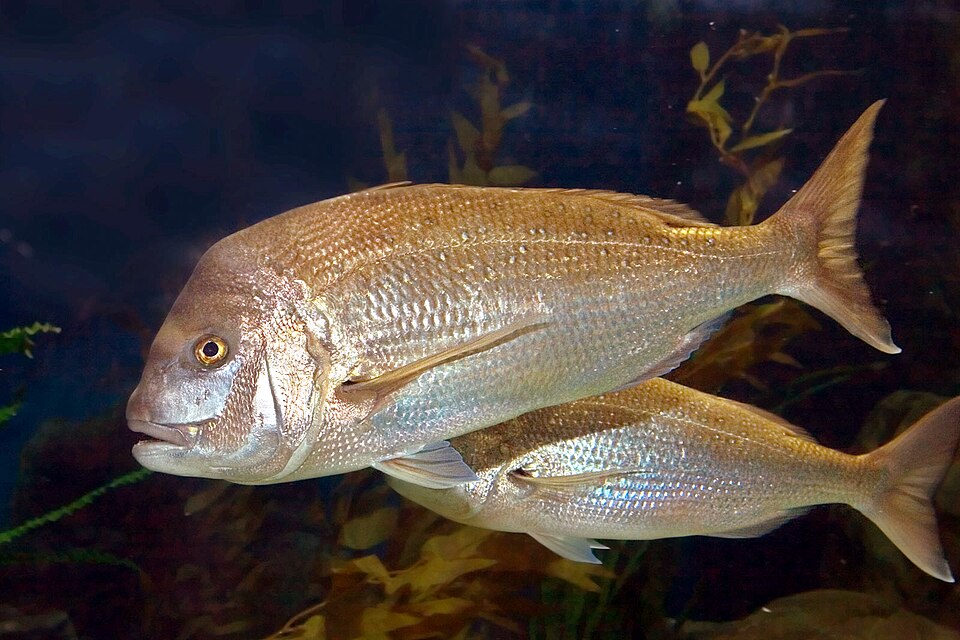
Photo: Melbourne Aquarium, GFDL 1.2, via Wikimedia Commons
Where snapper hold in Victoria
Snapper are structure fish. They relate to reef, weed, sand transitions, and current — not open blue water on most shore dives.
Look for:
- Rocky reef edges and drop-offs — where kelp meets sand or where reef steps down into a gutter. Mornington Peninsula and Bass Strait inlets offer classic geometry.
- Kelp and weed transitions to sand — snapper cruise along these edges, especially at dawn and dusk.
- Port Phillip Bay reefs — productive when outside marine national park and sanctuary no-take zones. Map discipline is mandatory: Port Phillip Bay guide.
- Western district reefs off Warrnambool and Portland — conditions permitting; not beginner terrain when swell and wind pick up.
- Phillip Island and Wilsons Promontory region — mixed zoning; sanctuary and inlet rules apply locally. See banned waters.
They often face into current on the up-current side of structure. Approach from down-current when possible so you are not pushed into the fish before you are ready.
Depth varies by season and water temperature. Inshore shore divers commonly encounter snapper between 4 and 12 metres in Victoria. You do not need to dive deep to find fish — you need to be in the right position quietly.
Reading snapper behaviour
Snapper spook from above and from direct approach. A diver dropping on top of a school sends them deep or wide. A diver lying still on the edge lets curiosity work — fish circle, pause, and sometimes commit within range.
Watch from the surface before you dive. Note travel direction, depth, and whether fish are feeding or cruising. Feeding fish are more forgiving; cruising fish demand perfect stillness.
Smaller pink snapper often move in loose groups. Larger fish hold deeper on the same structure or arrive alone. Be certain of identification and size before you shoot — other reef species share the same ground.
Approach tactics
Snapper spook easily from above. Best results come from patience and angle, not speed.
- Aspetto on the edge — the primary Victorian beginner tactic. Settle on the bottom where snapper travel and wait. Full technique: ambush guide.
- Swim into current so fish face away and current masks your sound.
- Keep sun at your back when possible — harder for fish to resolve your silhouette.
- Enter water away from reef — no splashy jumps off rocks. Slide in, settle, then dive.
- Slow stalk on sand channels between weed patches when fish will not come to you on structure.
Read stalking basics in the main beginner guide. Combine short stalks with aspetto on the same session.
Never shoot into a school "at the big one" without a clear shot — pass-through risk on reef and collateral injury on adjacent fish are both unacceptable.
Gear for Victorian snapper
- 90–110 cm rail gun, 6.5–7 mm shaft, single band for most shore diving. Shorter guns suit murky Port Phillip Bay; longer guns give reach on clear ocean reef.
- Reel gun useful on snaggy reef where a floatline catches in kelp. Floatline on open reef where you need drag to stop a running fish.
- 3–5 mm wetsuit by season — 3.5 mm for summer bay sessions; 5 mm+ for winter ocean.
- Weighting for neutral hover at 6–8 m. Wrong weight ruins approach before the shot.
- Float with Alpha flag — boat traffic is real on bay snapper reefs. Safety checklist every dive.
- Knife for dispatch and entanglement.
Borrow before committing to expensive kit: try gear from the equipment library. Test gun length and suit thickness on your actual snapper grounds.
Shot placement
Aim for head or shoulder — a spinal shot for clean kill. Snapper are tough; body shots tear flesh, weaken holding power, and may lose fish into reef cracks.
Shoot only when the fish is broadside or at a slight angle. Straight-on face shots are small targets and risk jaw hits that do not anchor.
Never shoot into uncertain identification or crowded reef where pass-through hits rock. Know what is behind your target.
Range discipline matters. Aspetto should give you close shots. If you are at the limit of your accuracy, let the fish go — there will be another.
Legal limits in Victoria
Bag limits and size limits change. At the time of writing, the VFA lists a minimum legal size of 28 cm and a bag limit of 10 snapper, of which no more than 3 can be 40 cm or longer. Snapper can't be filleted in or on Victorian waters — keep them whole until you are away from the water. The VFA publishes the authoritative current rules.
General principles every spearo must follow:
- Measure every fish — know the legal minimum size for the current season.
- Return undersize immediately — do not retain, photograph on a stringer, or "check later."
- Know combined bag limits if keeping multiple species on the same day.
- Possession limits apply at home — not just on the boat or at the beach.
- Licence required — unless exempt. Overview: Victoria spearfishing regulations.
This article does not reproduce rule tables — they go stale. Check the VFA guide and VicFishing app before every season and after any announced rule change.
After the shot
Control the fish away from reef — reel or hand-line carefully. A powerful snapper will run for structure. Anticipate the direction of the hole they want.
Iki jime or sharp brain spike immediately — then bleed in slurry or iced water. Humane dispatch is ethical obligation, not optional style.
Do not stringer fish alive on your belt in shark-prone conditions without understanding local risk. For most Victorian shore sessions, dispatch and bleed promptly.
Respect possession limits at home and on water. Social media photos create evidence — keep your catch legal and defensible.
Safety on snapper dives
Snapper ground is often the same ground as boat traffic, surge, and depth temptation. Snapper sessions are not an excuse to extend breath-hold or dive alone.
- One up, one down — buddy system
- Surface interval 2× dive time
- No hyperventilation — blackout guide
- Equalise early — Frenzel for spearos
Aspetto on snapper structure feels easy. That comfort is when blackouts happen. Treat every dive like the first dive of the day.
Seasonal and local notes
Warmer months often bring inshore movement and more shore-accessible fish. Local club knowledge helps identify when reefs produce. Check the VFA guide for any rule changes before the season.
Tide matters. Some Victorian reefs fish better on the flood, others on the ebb. Ask local spearos; observe before you assume.
Winter snapper diving is viable in Victoria with thicker suits and shorter sessions. Fish may hold deeper; your comfort envelope shrinks in cold water. Adjust expectations, not safety rules.
FAQ
Best time of year?
Often warmer months bring inshore movement — local club knowledge helps; check the VFA guide for current rules. Dawn and dusk sessions routinely outperform midday summer dives on structure.
Can I spear snapper in Port Phillip Bay?
In permitted areas outside marine national parks and sanctuaries — see PPB guide. Sanctuary boundaries are not visible from the water; use official maps.
Do I need a boat?
Many Victorian snapper are taken shore diving reef edges accessible on calm days. Boats extend reach but are not required to learn the species.
How do I know if a snapper is legal size?
Learn the current minimum legal length from the VFA guide and practise measuring underwater with your hand span or a gauge. If in doubt, do not shoot.
What if I injure a snapper but do not land it?
A poor shot that escapes may still kill the fish — another reason for head and shoulder placement only. Practise on plentiful species before targeting trophy fish.
Can I target snapper in marine national parks?
No. All fishing is banned in every marine national park and marine sanctuary in Victoria, including spearfishing.