Spearfishing Wetsuit Guide for Victoria — Thickness, Fit & Seasonal Choice
How to choose a spearfishing wetsuit for Victoria — 3 mm vs 5 mm, two-piece vs steamer, open-cell vs lined, winter diving and what to borrow from the library.
Victoria is not Queensland. Water temperature in Port Phillip Bay can reach the high teens in summer — then drop to single digits on the west coast in winter. The wrong wetsuit means shivering on the bottom, rushed ascents, and bad decisions. The right suit lets you stay calm for aspetto and focus on fish instead of teeth chattering.
This guide covers thickness, cut, open-cell vs lined, care, and how wetsuits interact with weighting — for shore and inshore boat diving across the state.
Pair with beginner gear overview and try before you buy.
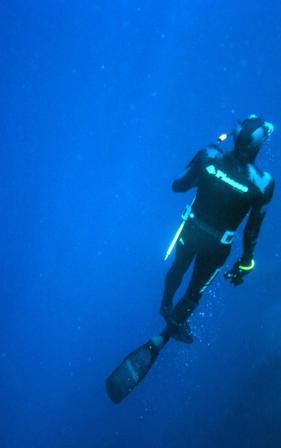
Photo: David McMurdie, CC BY-SA 3.0, via Wikimedia Commons
Water temperatures you will actually feel
Approximate Victorian ranges (surface to thermocline varies):
| Region / season | Typical feel | Common suit choice |
|---|---|---|
| Port Phillip Bay — summer | 16–20 °C | 3–3.5 mm two-piece |
| Peninsula — summer | 14–18 °C | 3.5 mm two-piece; hood optional |
| Bay / Peninsula — winter | 10–14 °C | 5 mm two-piece + hood + gloves |
| Surf Coast — summer | 14–17 °C | 3.5–5 mm depending on session length |
| Western district — most of year | 12–16 °C | 5 mm + hood standard |
| Long winter sessions (90+ min) | Any region | Thicker than minimum; warm drink on shore |
Cold does not just feel bad — it increases blackout risk when you push stays because you “came all this way.” Dress warmer than minimum if you are learning.
Thickness — what the numbers mean
Neoprene thickness is measured in millimetres on torso and legs. Thicker = warmer and more buoyant (needs more lead).
3 mm: Summer Bay and protected Peninsula bays; short to medium sessions.
3.5 mm: The Melbourne “one suit” compromise for many spearos — fine October–April on calm days.
5 mm: Winter Peninsula, Surf Coast, and western Victoria; also summer if you feel cold or dive long.
7 mm: Rare for Victorian spearfishing; occasional winter west coast or long static waits on bottom.
Most active Victorian spearos own two suits (3.5 mm + 5 mm) rather than one “average” suit that fails both seasons.
Two-piece vs single steamer
Two-piece (jacket + pants)
Pros: Versatile — wear thicker top / thinner legs; easier bathroom breaks on long shore days; common in spearfishing lineups
Cons: Double zip maintenance; beaver tail must seal well or cold flushes at kidney
Verdict: Default choice for Victorian reef spearfishing.
Single steamer (one piece)
Pros: Simple; one zip; good for pool and travel
Cons: Less flexible for mixed thickness; harder to adjust mid-season
Verdict: Fine for beginners on a budget if fit is excellent — many upgrade to two-piece later.
Open-cell vs lined (internal lining)
Open-cell interior
Neoprene grips skin directly — much warmer because water layer does not flush easily.
Pros: Warmth per mm; popular with freedivers and serious spearos
Cons: Needs soapy water or lube to don; tears if you pull with dry hands; harder to dry fully between dives
Lined (nylon or smooth internal lining)
Easier to slide on dry; more durable for rental and library use.
Pros: Beginner-friendly; faster turnaround between sessions
Cons: Slightly less warmth — compensate with +0.5 mm thickness
The Equipment Library may stock both — try open-cell on a cold morning before committing.
Camo, colour, and abrasion panels
Camo pattern does not make you invisible to fish — movement and noise dominate. Patterns help hide gear on the bottom slightly and look the part; do not choose camo over fit.
Abrasion panels on knees and elbows worth having for Peninsula reef and Port Phillip — you will kneel on rock and weed.
Fit checklist
A spearfishing suit should feel snug, not strangled:
- No gap at lower back when you touch toes (beaver tail or steamer seal)
- Wrists and ankles close without cutting circulation
- Neck seal allows breathing and equalising without flushing every duck dive
- Shoulders free for gun tracking and loading
- Zip pulls without forcing — forced zip fails in salt
Too loose = cold flush. Too tight = panic and poor breath-hold.
Sizing tip: Manufacturer charts lie for broad shoulders — try before buying; borrow from library in two sizes if between.
Hood, gloves, and socks
Hood: Biggest warmth gain after thicker suit. Use with 5 mm in winter or any session where you lose feeling in ears or scalp first.
Gloves: Protect hands from reef and line; reduce dexterity for gun and reel. Many Peninsula divers skip gloves in summer; use in winter or sharp reef.
Socks: Under fins — prevent rub and add warmth. Match to suit thickness.
Re-test weight belt with hood and gloves — they add buoyancy.
Wetsuit and weight belt together
Every thickness change alters buoyancy. When you switch from 3.5 mm to 5 mm:
- Re-run surface float test in same spot depth
- Adjust lead in 0.5 kg steps
- Re-check end-of-dive when suit is compressed and you are tired
Skipping this is how beginners sink on the bottom or fight float at the surface.
Care — make suits last
- Rinse inside and out in fresh water after every dive
- Hang on wide hanger — not shoulders on thin peg (stretches neck)
- Turn open-cell inside-out to dry in shade — never hot car boot long-term
- Repair small tears with neoprene glue before they spread
- Avoid sunscreen on suit contact areas — degrades neoprene
Library borrowers: follow return care in loan terms — wet sandy suits damage stock for the next member.
Seasonal kit matrix (Victorian shore diver)
| Month (approx) | Typical kit |
|---|---|
| Dec–Feb | 3–3.5 mm two-piece; optional hood for long sessions |
| Mar–May | 3.5–5 mm; hood as water drops |
| Jun–Aug | 5 mm + hood + gloves; shorter dives |
| Sep–Nov | 3.5–5 mm transition; watch forecasts |
Common mistakes
- One 3 mm “for everything” — miserable May–September
- Buying online without trying — wrong torso length common
- Ignoring beaver tail gap — cold kidney flush kills sessions
- Same weights after suit change — buoyancy wrong
- Sun-drying neoprene — stiff, cracked, leaks
Borrow before you buy
Wetsuits are the hardest item to guess remotely. Borrow 3.5 mm and 5 mm across two weekends via the Equipment Library — same spots, same weight test procedure.
FAQ
Is 5 mm too warm for summer Peninsula days?
On hot shallow sessions, yes — overheating is real. Own a summer suit; do not only own winter rubber.
Open-cell or lined for first suit?
Lined or library trial first; move to open-cell when you commit to regular winter diving.
Can I use a scuba wetsuit?
Often wrong cut (zip front, bulky) and wrong buoyancy profile — spearfishing/freediving suits fit better for gun work.
How long should a suit last?
With care, several seasons of active use. UV and poor drying kill suits faster than fish spikes.
Does the library stock hoods and gloves?
Check /equipment — accessories vary by location and season.
Related: Safety checklist · First speargun