Choosing Your First Speargun in Victoria — Length, Bands & Setup
How to choose a beginner speargun for Victorian spearfishing — rail vs roller, 90–110 cm length, bands, shafts, and what to borrow from the library first.
Your speargun is the tool that defines range, noise, and how you hunt. Buy the wrong one and you fight the gun instead of the fish — too long in murky Port Phillip Bay, too short on western reef, wrong band stiffness for your loading strength. This guide helps Victorian beginners choose a first gun that matches local conditions, not Instagram bluewater setups.
Pair with beginner gear overview, float and rigging, and library trials.
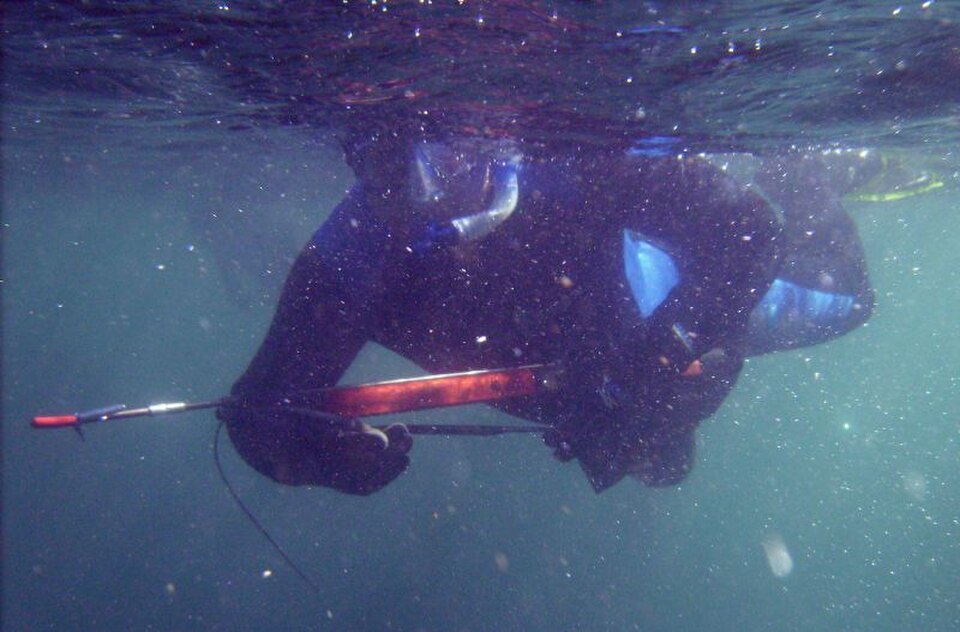
Photo: nugunslinger, CC BY 2.0, via Wikimedia Commons
Rail gun vs roller vs pneumatic
Rail gun (recommended first gun)
A rail gun has a shaft guided along an open or enclosed track, powered by rubber bands. It is the default Victorian inshore gun — simple, reliable, easy to service.
Pros: Affordable, quiet open-muzzle models on reef, parts widely available
Cons: Band stretch limits reach compared to rollers at same length
Roller gun
Rollers use pulleys to increase band stretch and power in a shorter package. Excellent when tuned — but tuning, rethreading, and band matching have a learning curve.
Pros: More power per length; compact for caves and kelp
Cons: Heavier maintenance; over-gunned rollers tire beginners on long sessions
Verdict: Second gun, not first — unless you have a mentor tuning it for you.
Pneumatic (Hawaiian sling / air gun)
Pneumatics use compressed air. Less common in Victorian reef spearfishing for beginners. Different rules, servicing, and hunting style.
Verdict: Skip for first purchase unless you have specific local mentorship.
Length — the Victorian reality
Gun length is measured along the rail (roughly shaft plus handle). It sets maximum practical range and manoeuvrability in kelp and caves.
| Length | Best for | Victorian context |
|---|---|---|
| 75–90 cm | Tight kelp, caves, very murky water | Selected Bay dives, beginner pools |
| 90–110 cm | General inshore reef | Default first gun — Peninsula, Phillip Island, most shore reef |
| 110–120 cm | Clearer water, larger fish further out | Boat reef, west coast on good vis days |
| 130 cm+ | Bluewater, pelagics | Not a first gun — current, loading fatigue, over-penetration on reef |
Rule of thumb: You should be able to track a fish from pickup to shot without the shaft tip hitting the bottom when aiming level on a typical reef dive. If visibility is under 5 m, a 100 cm gun often beats a 120 cm you cannot see down.
Bands and loading
Beginner Victorian setups commonly use:
- Single band 16–18 mm diameter — easier loading, less wrist fatigue over 2-hour shore session
- Double band on same gun — more power when you are ready; increases loading difficulty
Band length is matched to rail and wishbone — do not copy random band kits without a shop or experienced spearo measuring your gun.
Loading tip: Load on the surface or between dives with gun pointed safe direction — never towards buddy or beach users. Practise dry loading before first hunt.
Shafts and tips
- 6.5–7 mm shaft common on inshore reef guns
- Flopper (single barb) standard for reef — holds fish, easier to extract than trident for beginners
- Threaded tips allow slip tips later — not needed day one
Shaft length matches gun — buy matched sets from reputable brands rather than mixing mystery parts.
Open muzzle vs enclosed track
Open muzzle — shaft runs on top of rail; often quieter when bands release; popular for snapper and wary reef fish.
Enclosed track — shaft inside channel; can be slightly noisier but guides shaft well in rough handling.
For aspetto hunting, noise matters — many Victorian snapper hunters prefer open muzzle.
Reel vs floatline on your first gun
You need one connection system before hunting:
- Reel on gun — freedom around reef; line management skill required
- Floatline to surface float — traditional; excellent with Alpha flag float; can tangle in kelp
First season: many Peninsula divers use a medium reel (30–40 m) on a 100 cm gun for reef mobility. Floatline setups excel on sand edges and boat dives with clear water above.
Deep dive: Float line rigging guide.
Matching gun to target species
| Target | Gun notes |
|---|---|
| Snapper | 90–110 cm, accurate flopper, quiet release — snapper guide |
| Flathead | Shorter OK; close shots on sand |
| Squid | Medium length; quick aim; avoid over-penetration |
| Trevally | Slightly longer reach in clear water; fast tracking |
Common beginner mistakes
- Buying 130 cm because it looks pro — misses in murk, hits reef
- Double bands before single-band loading is easy — fatigue and bad shots
- No float or reel — lost fish and lost gun
- Dragging loaded gun on surface — dangerous to you, your buddy and beach users
- Cheap mismatched shaft/band kit — dry fires and bent shafts
Maintenance basics
- Rinse gun, shaft, and bands in fresh water after every dive
- Store bands relaxed — not under tension in sun
- Monthly check screw threads, wishbone, and line on reel
- Replace bands when cracks appear — they fail catastrophically
Try before you buy
The Equipment Library stocks spearguns in common lengths. Borrow a 100 cm and 110 cm on separate weekends at the same spot before spending $400–800.
Process: Try gear before you buy.
FAQ
What speargun brand is best?
Fit, local support, and shaft quality matter more than badge. Victorian shops service what they sell — buy where you can get bands and shafts matched.
Is a roller worth it for Port Phillip Bay?
Usually not as a first gun — a well-set 100 cm rail covers Bay reef.
Can I travel overseas with my Victorian gun?
Check airline and destination rules before you fly with a speargun. If you borrow from the Equipment Library, the same loan terms apply overseas.
One band or two for snapper?
Single 16–18 mm until loading is effortless through a full session.
Do I need a power head?
Not for recreational Victorian reef spearfishing — separate legal and safety category.
Related: Weight belt setup · Safety checklist