Spearfishing Float Line Rigging — Reels, Bungee & Breakaways
Complete spearfishing rigging guide for Victoria — floatline vs reel, bungee shock cord, breakaway setups, kelp reef vs open water, and common rigging mistakes.
Rigging connects your speargun to your float, controls fish after the shot, and keeps you legal-visible on the surface. Bad rigging loses fish, loses guns, and tangles you in kelp on a Peninsula reef in zero visibility.
This is the practical Victorian inshore guide — not tournament bluewater rigging.
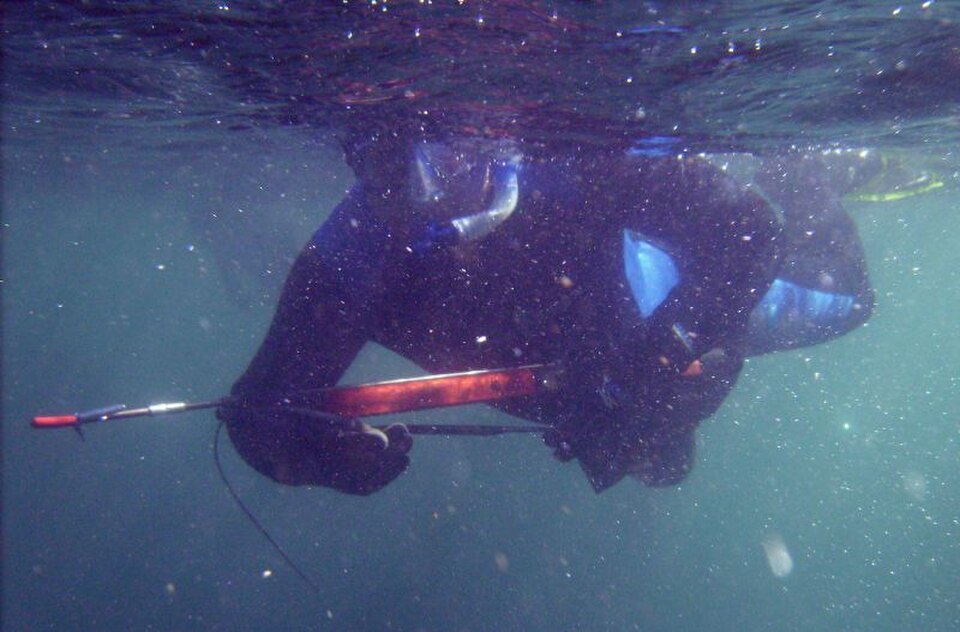
Photo: nugunslinger, CC BY 2.0, via Wikimedia Commons
Floatline vs reel — choose one primary system
Floatline (fixed line to float)
Traditional setup: gun → shock bungee → line → surface float.
Pros: Simple; strong; direct fight; standard teaching path
Cons: Kelp tangles; fixed length less flexible in mixed terrain
Best for: Sand edges, boat dives with clear water above, beginners learning line control.
Reel on gun
Line stored on spool mounted on gun; short float bungee to float.
Pros: Shorter deployed line in kelp; easier reef mobility
Cons: Palm drag technique; overrun tangles; maintenance
Best for: Kelpy reef, aspetto hunting, Peninsula structure dives.
Many Victorian spearos start floatline, add reel in year two — or borrow both from the Equipment Library.
Line materials
- Monofilament / nylon — stretch absorbs shock; cheap; UV wear
- Dyneema / spectra — low stretch; strong; cut-resistant; needs length management
- Coated floatline — abrasion resistance on reef
For beginners, pre-made spearfishing floatline kits with crimps and swivels beat DIY mystery knots.
Bungee shock cord
A bungee section between gun and main line stretches during fish runs, reducing straight pull on shaft and barb.
Typical inshore: 1–3 m bungee depending on setup.
Without bungee: Hard hits tear flesh or straighten barbs on snapper runs into reef.
Standard floatline rig (step by step)
- Gun muzzle attachment point or reel line exit
- Swivel — reduces twist
- Bungee — rated for spearfishing shock loads
- Main floatline — length set for max dive depth + margin (often 25–40 m inshore)
- Float attachment — solid ring or bridle on float
Test all crimps and knots dry with steady pull before first dive.
Reel rig (step by step)
- Reel mounted to gun barrel or handle — balanced weight
- Line loaded under moderate tension — not loose loops
- Line clip or ring at muzzle for shooting line
- Short bungee from gun to float — keeps float tracking
- Practise palm drag on land — thumb on spool rim
Overruns happen when fish run fast with no drag — practise before snapper.
Breakaway rigs
Breakaways let the float separate from a snagged gun so you surface with the float while recovering gun later — or reverse configuration depending on design.
Know before diving:
- Which clip releases under what load
- How to reassemble on a wet boat
- Never confuse breakaway with weak crimp that loses fish
Used more in heavy kelp and cave edges — advanced addition, not day-one requirement.
Rigging for Victorian environments
| Environment | Rigging note |
|---|---|
| Port Phillip murk + traffic | Strong float connection; shorter effective line; flag visible |
| Peninsula kelp reef | Reel or shorter floatline; knife on float |
| Phillip Island sand edge | Floatline OK; watch swell on exit |
| Western coast clear water | Longer line; larger float; boat pickup plan |
Spot context: Victoria spearfishing spots.
Shot-to-landing workflow
- Shot fish — keep line off reef where possible
- Play fish with arm length and float drag — not straight locked elbow
- Surface buddy watches line and traffic
- Dispatch and bleed per ethics and rules
- Store in catch bag on float — not dragging deep
Safety and entanglement
- Line around wrist is never acceptable
- Know how to cut line at float knife in 5 seconds blind
- If tangled in kelp: stop, breathe, cut — do not panic dive deeper
- Buddy holds float if you are fighting fish near surface
Common rigging mistakes
- No swivel — twisted line weakens crimps
- Wrong crimp size — slips under load
- Full 60 m line in 6 m kelp — constant tangle
- Loaded gun not connected to float — poor visibility to boats and lost gear
- Sun-damaged line — replace yearly on active season
Pre-season rigging check
At home, not on the ramp:
- Inspect line for nicks and UV fuzz
- Re-crimp or replace terminal hardware
- Bungee elasticity still present
- Reel drag functions
- Float D-rings solid
- Floatline length marked mentally for max depth you will dive
FAQ
Floatline or reel for first gun?
Floatline teaches line feel; reel helps kelp — borrow both from library if unsure.
How long should floatline be for 8 m dives?
Depth plus fight room — often 25–35 m total path to float, not 8 m exactly.
Can I use scuba reel line?
Use spearfishing-rated line and crimps — loads differ.
Dyneema without bungee?
Low stretch increases tear-out — use bungee or controlled drag.
Does library gear include rigged floatlines?
Check current equipment catalogue — rigs vary by item.
Related: First speargun · Safety checklist