Beginner Spearfishing Gear for Victoria — What You Actually Need
A practical spearfishing starter kit for Victorian waters — wetsuit thickness, gun length, fins, float line, and what to borrow first.
The gear industry wants you to buy everything at once. Smart beginners build a minimal safe kit, borrow what they can, and upgrade after a season in the water. This list targets Victorian shore and inshore boat diving. Adjust thickness and gun length for your local conditions.
Spearfishing gear is personal. Mask fit depends on face shape. Fin stiffness depends on leg strength and diving style. Wetsuit thickness depends on how cold you run and which season you dive. Buying new without testing is how beginners end up with $800 fins they hate and a mask that leaks. Read try gear before you buy and use the Equipment Library before committing.
Essential kit (in order of priority)
Buy or borrow in this order. Do not purchase a speargun until mask, fins, wetsuit, weighting, and buddy safety are sorted.
1. Mask and snorkel
Low-volume freediving mask — easier to equalise and clear. Simple J-tube snorkel without fancy valves. Purge valves and dry tops add failure points without meaningful benefit for spearfishing.
Fit matters more than brand. No leaks, no jaw pain. Test by inhaling gently through the nose without the strap — the mask should stay on your face. Hair under the skirt causes leaks. A poorly fitting mask makes equalising harder and wastes dive time clearing water.
Carry defog solution or use the spit-and-rinse method. Murky Victorian water makes vision bad enough without a fogged lens.
2. Wetsuit
Victoria is cold compared to Queensland. Water temperatures in Port Phillip Bay range from roughly 10°C in winter to 20°C in late summer. West coast and Gippsland exposure varies with swell and upwelling.
- Summer / Port Phillip: 3–3.5 mm two-piece common
- Winter / west coast: 5 mm two-piece, hood and gloves
Open-cell interior stays warmer but needs soapy water to don and tears more easily on sharp reef. Closed-cell lined suits are easier to maintain for beginners. Two-piece suits (jacket and long john) allow better fit adjustment than one-piece.
Protect suits from sun and sharp reef. Rinse in fresh water after every dive. Hang dry out of direct sunlight. A torn suit in winter ends your season early.
3. Fins
Long-blade freediving fins (soft or medium stiffness for beginners). Snorkel fins waste energy on shore entries and current. Soft blades forgive inefficient kick technique while you learn.
Carbon fins are lighter and more responsive — and expensive. Fibreglass or plastic composite blades suit first season divers. Stiff fins without good technique cause cramping and slow progression.
Booties protect feet on rocky Victorian entries. Match bootie thickness to your wetsuit and weighting setup.
4. Weight belt and lead
Rubber belt with quick-release buckle. Start light — see weight belt guide. Over-weighting is a common beginner mistake that makes surface recovery harder and increases blackout risk.
Lead weights on a rubber belt drop cleanly in an emergency. Nylon belts bind and do not release as reliably. Always dive with a quick-release you have practised removing underwater and on the surface.
Weighting changes with wetsuit thickness and salt vs bay water. Re-check weighting when you change suit season or move from pool to open water.
5. Knife
Two is common practice — one on belt, one on leg or arm. For cutting line and kelp, not fish drama. A blunt-tip or serrated edge reduces self-injury risk in poor visibility.
Secure knives in a sheath with positive retention. A knife that falls out on the reef is useless; one that falls out in your wetsuit is dangerous.
6. Float, flag, and line
High-visibility float with Alpha dive flag. Boats must see you — especially in Port Phillip Bay summer traffic. Rig floatline or reel to gun — never tow a loaded gun on surface without cover.
Float line length depends on diving style. Shore reef diving in 3–8 m typically uses 15–20 m of float line. Offshore and bluewater need longer setups — not day one.
When you progress beyond basic shore diving, read our guides on floats and dive flags and float line rigging. For now: visible float, Alpha flag, line connected to gun, gun covered when not in use.
The float also gives your buddy a surface reference for your position. Bright orange or yellow — not camouflage.
7. Speargun
90–110 cm rail gun suits most Victorian inshore reef. Single 16–18 mm band for beginners. Open muzzle is quieter on reef than enclosed track. Shorter guns manoeuvre better in kelp and around reef structure.
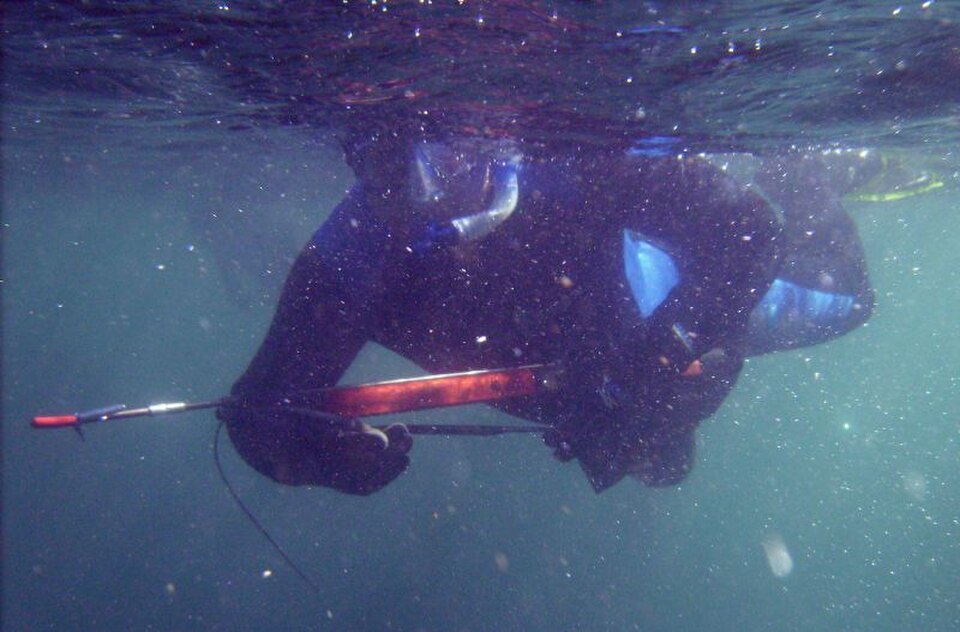
Photo: nugunslinger, CC BY 2.0, via Wikimedia Commons
Boat bluewater later may want 120–130 cm — not day one. Roller guns store more energy in shorter packages but add complexity and cost. Rail gun for your first season.
Do not load or dry-fire on land except during maintenance. Treat every loaded gun as loaded. Confirm target and backdrop underwater before shooting. Know Victorian regulations for permitted species and waters before your first shot.
Add the speargun only after completing shallow sessions with mask, fins, and weighting. The Victoria beginner guide recommends week four — not day one.
Nice to have (not day one)
- Dive watch or simple depth timer
- Gloves and hood (seasonal — often essential in winter, optional in summer)
- Catch bag or stringer
- Flasher for pelagic hunting offshore
- Mesh gear bag for transport and rinsing
A dive watch helps track dive time and surface recovery intervals. It does not replace buddy supervision. Useful offshore; optional for shallow shore with a buddy and conservative dives.
Gloves protect hands on rocky entries and from abrasion. They also reduce feel on the trigger — many divers go gloveless in summer. Hood is essential for winter 5 mm setups.
Borrow before you buy
Spearfishing gear is personal — mask fit, fin stiffness, suit thickness. The Equipment Library lets verified members test kit before spending thousands.
Browse current inventory: /equipment.
Borrowing also lets you compare open-cell vs lined suits, soft vs stiff fins, and gun lengths on the same reef. One weekend with borrowed gear teaches more than a month of forum research.
Seasonal Victoria note
Winter spearfishing needs thicker rubber, hood, gloves, and shorter sessions. Hypothermia impairs judgment and increases blackout risk when paired with breath-hold stress. Summer brings more boat traffic — flag discipline matters more in Port Phillip Bay.
Spring and autumn offer good visibility and moderate temperatures on the Mornington Peninsula. Winter west coast diving suits experienced divers with proper thermal protection — not ideal first dives.
Adjust your kit seasonally. The 3 mm suit that works in February will not work in July. Re-check weighting with every thickness change.
Gear and the rest of your progression
Gear enables diving. It does not replace skills:
- Buddy system — before gear matters
- Equalising — before depth
- Safety checklist — before every session
- Aspetto technique — before chasing fish
- Rules and licence — before entering water
Confirm dive sites are legal — Port Phillip Bay guide and banned waters.
What not to buy as a beginner
- Powerheads — not recreational gear, heavily regulated
- Multiple spearguns before you know your preferred length
- Enclosed-track guns optimised for pelagic hunting
- Carbon fins at premium price before kick technique develops
- Dive computer with advanced freediving modes you will not use in year one
Spend the budget on fit and basics. Upgrade after a season when you know what you actually need.
FAQ
Rail gun vs roller?
Rail gun for beginners — simpler, cheaper, easier to maintain. Rollers come later if you want shorter gun with more power.
Do I need a dive computer?
Helpful offshore; optional for shallow shore with a buddy and conservative dives. A simple depth timer or watch covers most beginner needs.
What about speargun power heads?
Not recreational beginner gear — and heavily regulated. See Victoria rules.
How much does a full kit cost new?
$1,500–3,000+ depending on brands and quality. Borrow first. The Equipment Library exists to reduce this barrier for approved members.
Open-cell or lined wetsuit?
Open-cell is warmer and more flexible. Lined is easier to maintain. Try both through the library before deciding.
What gun length for Port Phillip Bay reef?
90–100 cm handles most inshore reef and kelp. Longer guns for open water and pelagic — later progression.
Next reads: Safety checklist · Snapper in Victoria · Victoria beginner guide